Friday, 18 November 2011

Jos, Nigeria to N'djamena, Tchad: Images

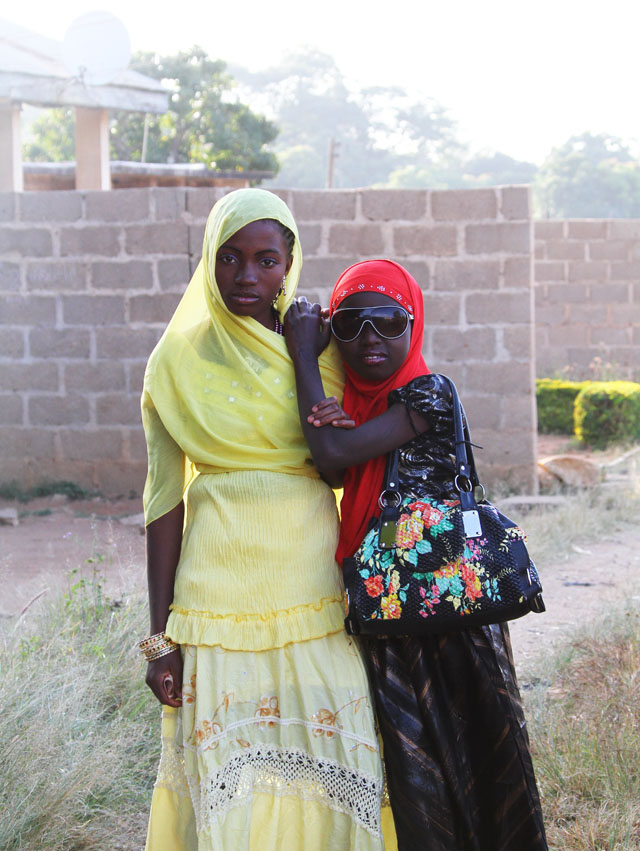
Veiled Walk - Iwo Road, Ibadan (Emeka Okereke)


Arms Giving on Sallah, Zone 4, Abuja (Emeka Okereke)


Campus Wahala, Wuse Market, Abuja (Emeka Okereke)


Heavy is the Head with the Crown - Utako Motor Park, Abuja (Emeka Okereke)
Hidden Treasure - Jos (Ray-Daniels Okeugo)

Bless Who - Abuja (Ray-Daniels Okeugo)
Immigrant - Jos (Ray-Daniels Okeugo)


Rubber Chic - Abuja (Ray-Daniels Okeugo)

Sunset Series I  - Jos (Jumoke Sanwo)


Sunset Series II  - Jos (Jumoke Sanwo)


Sunset Series III  - Jos (Jumoke Sanwo)


Sunset Series IV  - Jos (Jumoke Sanwo)


Sunset Series V  - Jos (Jumoke Sanwo)


Sunset Series VI  - Jos (Jumoke Sanwo)
Corn in Motion - Jos (Emeka Okereke)


Many Have Gone - Forest-Jos Road, Jos (Emeka Okereke)


Young Women - National Museum, Jos (Emeka Okereke)
Gbogbo Collection - Jos (Ray-Daniels Okeugo)

Little Man - Jos (Ray-Daniels Okeugo)
Tattoo Hand - Jos (Ray-Daniels Okeugo)
Last Flag Standing, Gamboru Ngala (Emeka Okereke)
  
Untitled II - N'djamena, Tchad

Veiled Stare - Central Market, N'djamena (Emeka Okereke)
The Veiled Stare - Central Market, N'djamena (Emeka Okereke)


Untitled - Central Market, N'djamena (Emeka Okereke)


Women of the Market, Central Market, N'djamena (Emeka Okereke)


Mr Idriss - Avenue Charles de Gualle (Emeka Okereke)
Multiple Textures, Avenue Charles de Gualle, N'djamena (Emeka Okereke)

Visitors, Not Strangers - Emmanuel Iduma


There are two stories to be told – the Nigerian Embassy story, and the Tchadian Police story. But these stories, of course, are being told from a visitor’s eye, the outlook of a first-timer in Tchad. I am preoccupied , deeply, with how to feel at home in N’djamena. It could be argued that I have no business feeling at home, that I will always remain a stranger. And there’s even the point that I am here for only seven days. The question becomes, for me, however, how to find a crack in the surface that identifies me though I am an English-only-speaking  visitor. I perceive that this is the same for the rest of the group, more for most of us who understand very little French.

Even more, I suppose we must come to the understanding that invisible does not, necessarily, and in fact, mean ‘absent.’ ‘Invisible’ comes with the expectation that the lines are there but they can be crossed. Or better, that the existent lines do not define Difference, that they are there because structures are necessary for patterned living. The borders, then, are here-but-not-here, and all we seek to do, in my understanding, is to consciously engage, evaluate, define, redefine the presence-absence of African borders in spatial and neo-spatial terms. In addition, our understanding of this presence-absence comes with the realization that identities are equally singular-plural, that although culture ensures individual patterns of seeing, all humans possess eyes. I am convinced that our primary concern, as a group of young African artists, is to emphasize the plurality of eyes and to celebrate the respective singularities of seeing. For, in the imminent and final analysis, we cannot all be the same.

It is an attempt to ‘regularize’ this sameness that made us decide to visit the Nigerian Embassy in Tchad. The Ambassador of Nigeria to Tchad’s residence is less than a minute’s walk from our hotel. We had thought it was the embassy. Redirected, we walked another five minutes to the Embassy. Understanding the legal importance of an Embassy (of how being in one’s country’s embassy meant such person was in his/her country), we made ourselves at home immediately. Our cameras began to click, our voices were raised – we were, in short, guilty of the ebullience Nigerians are accused of in foreign lands.

A man’s head popped out – “You think you can just enter an organization and begin to take photographs?” Then he asked, “Who’s your leader?”

First, I thought, this is not an ‘organization.’ For the first time in many weeks, I felt at touch with my legal education, wondering how the Head of Mission of an embassy would make little of his office. But that would be the least of his stunts. Conversing with Emeka and Ray, he insinuated that we should not have embarked on the trip without a letter from the Nigerian Foreign Affairs Ministry. His voice was dismissive and unsupportive of our project, until Emeka emphasized that attention has been drawn so often to ‘prodigal sons’ and never to ‘prodigal fathers.’

I must make the point that our generation has become an easy scapegoat for the failures and ineptness of our predecessors. We are told that we are foolhardy, ignorant of the severe dangers of our exuberance. Yet, all we are trying to do is cover up the distance that was uncovered by our parents. We are told there’s such a thing as African culture, but there are little (or no) documents that narrate with enthusiastic clarity what this ‘culture’ is, or is not.

So, we understood how easy it was for our Head of Mission to emphasize, in great and painstaking detail, how dangerous our route is. There is no question of our constant exposure to danger – Monday brought with it our second arrest. Yet, we are hardly encouraged by the preceding generation to systemize our adventures, to record our present realities, to demystify our dangers. We are constantly accused that our intelligence has been reduced to Facebook and the internet, and yet these tools are so powerful that we are able to use them to topple governments. These tools are so powerful that we are confident that, away from our bases for 45 days, our story will/must be told.

The picture is not completely grim, though. The officials at the Embassy were concerned as well as willing to help make our visit ‘official’ and they took the pains to write letters to the Tchadian foreign ministry and the Sudanese Embassy.  Yet, I must emphasize that our generation must not be dismissed as unserious, glitz-and-glamour seeking ignoramuses. We are, certainly, not one thing.

There is a price to pay for our adventure, though. (I am not comfortable with summing this project as  an ‘adventure.’ Even ‘seeing’ does not suffice. My point is that we cannot be summarized or emphasized as this or that.) Given that we are always found with our cameras, it is safe to say that we are always keen to make photos and/or movie clips. There is an interesting legal slant to this – does the artist always have the right to make art, whether or not it is a photograph? And does the artist’s subject possess the intrinsic right to choose to be a subject?

To put this in proper perspective, I will tell the story of our (Emeka, Ray, and myself) arrest on Monday. We had gone to the market because we had to pick a few things. As usual, camera’s began to click. Ray was with Emeka, and Jumoke was nearby. Nana, Kemi and I were buying things from another part of the market. Jumoke came to us and announced that Emeka and Ray had been arrested. We hurried to the market’s sub-police station where they had been taken. Getting there, we were to leave, being told that they would be fine. Minutes later, I was asked to come with the small file where we kept letters describing our project.

I lost my freedom the moment I came with the file. Losing our freedom did not mean being behind bars. It meant Ray’s and Emeka’s camera was seized, and that we had to stay on until they were released. So we stayed on. After two hours, we were transferred to a different police station, out of the market. The simple reason why we ended up staying close to six hours is that none of the Police chiefs felt they were the right person to release our cameras. The first chief (head of the market sub-station) was the only one of the lot who did not welcome us with a smiling face. Others did; they chatted with us about Nigeria, our work, examined our postcards, welcomed us to Tchad; when it was time to make a decision to let us go, they shifted the responsibility to their superiors. And so, we faced a total of three chiefs, and we were waiting for a fourth chief when salvation came.

Now, it is important to speak about how Tchad seems a relevant example of the institutionalization of paranoia. Clearly, this country (or this city) stands on an edge, an edge that has been defined by its closeness to Sudan, and political affinity with Libya. An edge that results from the possibility of Janjaweed infiltration. Given these, I perceive there has been  mal-information, so that the inhabitants of this town are unwilling to consider the fact that not all photographers/filmmakers (with equipments as good as ours) are propagandists or foes.

Salvation came when Emeka decided to call the French Cultural Centre (CCF). (I reiterate that we were not under any form of duress – the third chief served us sugared coffee, introduced us to various Tchadian musicians featured on the TV in his office.) But we were disgusted by his apparent nonchalance in our plight; for he even slept while we sat and waited for whatever from him. Hyacinth Tobio, our friend at the CCF, advised that we call Mr. Levy, President of Santana Hotel (recall his photograph from our photo story). And that was it. He sent a Colonel friend of his for us; in no time, the same Chief who said he was waiting for his boss returned our cameras, only demanding for our hotel address and a phone number (the Colonel gave his).

I am, unfortunately, still unable to figure out the exact words to use for this city. There is, I know, more poor than rich people, as I was told by another Colonel I met in a Lebanese restaurant – who had schooled in Slovakia, saying how good it was to travel. The poverty is not hidden here in the capital, which explains why things are quite expensive, given that only few can afford the non-Tchadian things (visitors like us, of course). I cannot tell, however, why there are so many flies, even in places where they are least expected (in the CCF compound, for instance.) And no one seems to mind, except me!

Occasionally, when I find someone who can speak English fluently, there is warmth in my heart, and I jump at the opportunity to share, listen, engage. I am writing this in the CCF compound, where there are a good number of young people with books. I have been looked at, gauged, but no one has come to me to say a word, to confirm my strangeness. I doubt if that will happen. Tchadians, like the rest of us, easily determine who is a stranger or not. There is, I believe, a line of difference between being a stranger and being a visitor. Our daily duty as visitors is to purge ourselves of every dint of strangeness; which is why I am wearing a cap now, which I bought in the market on Monday. I have been called Alhaji, etc., and my Colonel friend says it is a really Tchadian attire.

Already, we have attended a book festival, where we were introduced by the Director of the CCF. We made photos of the event where a monument placed to commemorate the death of 170 passengers in an Air France air crash in 1989.  On Thursday, we will be presenting the work of Invisible Borders to Tchadians in the CCF. And later on Thursday evening, we will be the guests of the French Ambassador to Tchad.

We are pushing to the end of this, despite unforeseen contingencies. Despite extra sleeping hours demanded by the ladies, and their consequent suspension from the project for a day; despite disappointments, turning-backs, uncertainties. We are pushing to the end of this.

We might be visitors, but may we never be strangers.

Wednesday, 16 November 2011

Emmanuel in conversation with Kemi on her Project


Pokart waz ere, Jos (Kemi Akin-Nibosun)

Emmanuel Iduma: What is your project about?
Kemi Akin-Nibosun: My project is about imposing; I mean it’s about being in Invisible Borders and what Invisible Borders is about. Invisible Borders is about crossing several borders and forming relationships. My work relates to this because I am part of Invisible Borders, I am part of going into these places and imposing myself. For example, we are in Chad; the Chadian government didn’t invite me, I’m here imposing myself. In some parts of my work you’ll see “pokart waz ere”, that’s like leaving remnants of myself behind.  

EI: This is very interesting. First of all, you talked about how we intend to form relationships, basically blurring these borders. I’m more interested in knowing not just about your project but what we are trying to do as a collective and why you think we need to form these relationships. Also, why do you think the independent structures that we already have shouldn’t exist anymore?
P KAN: For me, I would have to say, before coming to Chad I had my own presumptions, even of Cameroon which is just next door to Nigeria. Coming on this trip has allowed me to make my own judgments about these places. I think that’s the fundamental of this project. It’s for Africans to learn from themselves and explore themselves. For example when we were crossing the border from Cameroon to Chad and there was friction between the drivers and us, that’s all part of it – lack of understanding. It goes deeper than that, it’s like each country, society, and community have their own way of thinking. The Cameroonian driver understood the Nigerian female mentality and the Nigerian male mentality and played us against each other and we didn’t realize that until later. So that’s an example of learning from each other. In Tchad the mentality is different, the psychology is different. We are not only learning the culture, we are also learning how other people think, maybe it would teach us more about ourselves.

EI: Very beautiful. I think it is important that we have clarity of mind. As artists and photographers, it's clarity of mind that leads to clarity of vision. I kind of found it very problematic when you used the word ‘imposed’ for your project. I think it would be better if you elaborate what you mean by ‘impose’ because nobody asked you to impose yourself and nobody cares if “pokart waz ere” in that sense. So it’s important we understand the scope of what you mean by imposition.
P KAN: Well, when I say I’m imposing myself, I don’t mean it in the sense that I would come, destroy and leave or come, re-arrange and leave. (Although I will be doing a small amount of that because you cannot impose without leaving a mark.) What I mean is that I am an entity, a complete body. As a complete body moving through these channels a mark must be left. Like it or not, my mark is left in this hotel, physically, emotionally, and spiritually I’ve left something behind.

"...I’ve left something behind." Pokart Waz ere, Abuja (Kemi Akin-Nibosun)

"...a mark must be left." Drive Through the Cameroun Desert, Cameroun (Kemi Akin-Nibosun

EI: I think it’s clearer now. You used the word ‘remnants’ and it’s interesting that it sounds like an exchange. Until this moment Chad was never in our reality because we had never been here. I believe It is important for us to find ways to keep ourselves in Chad. Your project is actually doing that. You are using your photos to do that by saying “pokart waz ere” in the sense that a part of you is here. Do you think that this is an alternative way for you to see reality?
P KAN: Well... partly, because our purpose on earth is to create. For me, it’s also an outlet. It is more like a channel to let things out.

"Let Africa be the canvas!" Along Comes Ally, Maiduguri (Kemi Akin-Nibosun)
EI: I feel like this is also a form of soulical healing for you. It’s no longer a question of “this is Africa or this is not Africa.” It’s more a thing of Africa being the canvas for you.
P KAN: You’ve just hit the nail on the head! We need to forget about this need to tell a story of Africa. Let Africa be the canvas! It’s one of two things, either you see Africa as a canvas and you paint yourself on it. Or like Emeka (Okereke) said to me, let the environment make you feel. So this time around it’s no longer Africa being the canvas but it being a catalyst bringing forth the emotions you never expected. Africa can be your canvas or your catalyst.

EI: Beautiful! I could just go on and on but due to time I would like to quickly ask about your medium and how you intend to achieve this. 
P KAN: I have chosen for the duration of this project to work with a fish eyed lens and a Canon 60D because the 60D isn’t full frame but combined with the fish eye it allows a wide angled look. Also the saturation from the combination of the fish eye and the 60D is what I’m after. When it comes to editing I am very comfortable with Photoshop. I know there is a lot of criticism on using Photoshop but that’s what I’m comfortable with. I don’t add to the saturation or color, I simply adjust the brightness and contrast accordingly. I emphasize the focus of the image with a box, the places I want to impose with a shape or colour. 

EI: Lastly, what type of images are you making for this project?
P KAN: Originally it was going to be images of myself strategically placed in rooms where we stay; and you remember the first ones I did in Akachukwu’s studio. They were successful in their own right but I felt I was confined to a limited space hindering me from exploring the environment. Now it’s not going to be me anymore in the pictures, but the boxes would be a form of imposing myself on the images and spaces.

Pokart waz ere , Abuja (Kemi Akin-Nibosun)
For more on Kemi's work, please visit her blog.

Tuesday, 15 November 2011

Nigeria to Tchad (2) – Wide Lens View (A Photo Story)

Images: Tom Saater
Text: Emmanuel Iduma


(1)


1. Jumoke stands beside the man whose black market we patronized (Naira to CFA). Of course, he did this at an exorbitant rate. Sometimes, it is rational to think of a single African currency.


(2)


2. In currency conversion mode – Jumoke using her phone’s calculator as I separate my cash from Tom’s. Kemi looks on, and who knows what/where/who Nana is looking to.


(3)


3. Here are the two drivers (on the left) who ripped us of our money. Our agreement was that they would take us to N’djamena, and when we spent a longer time at the Cameroun border, they altered the agreement and said they would get us drivers to take us to N’djamena. As is clear from the photo, there is some looming friction between Emeka and the drivers – at some point, the driver whose hands are stretched began to pull our things from his car. This was at the Cameroun consulate, as pictured in ph. 16


(4)
4. The children of Gamboru Ngala, attracted by whatever was different about us.


(5)


5. Hands raised, lights converging: all parties to the looming disagreement try to make their point. The photo shows how blurred the border became between Gamboru and Invisible Borders. But this border soon became blurred again, unfortunately.


(6)
6. This is a tourist photo. Yet, I felt kin with these children. Very annoying that I did not ask their names
(7)
7. How long has this car stayed in this spot? How much longer will these Gamboru children find it a worthy play-site?


(8)
8. Overlooking the Nigerian-Cameroun border, while the lady on the right reads a letter describing our project. Now, I look like a real tourist!


(9)
9. Funny, right, that a Ghanaian passport could be the reason why we had to give a bribe to a Cameroonian policeman? I trust Nana has an interesting story to tell about being Ghanian.


(10)
10. Although Jumoke is smiling, I doubt that she is comfortable. Emeka is clearly thinking of the remaining distance, or whatever else he is. It is rare to find Emeka in this manner; given his constant and consistent ability to not-be-in-one-place.

(11)
 11. This was the Nigerian Immigration office; if Cameroun/Tchad were 'bigger' countries, I doubt this office will be as dilapidated as it is. 


(12)
 12. The last Nigerian flag before Cameroun. 


(13)
 13. Notice that the sun is setting while we cross the border. It will even get darker, and we will not be close to N’djamena. In fact, we ended our day's journey in Cameroun.


(14)
 14. At this point, I thought, “So, I’m in another country?” It did not seem/feel so, at all.


(15)
 15. Often amazing, right, when a signpost like this welcomes you to another country. Nothing, of course, is wrong with this signpost, only that I expected it to be bigger, and more illustrious. 


(16)
16. I remember how funny it was watching a Cameroonian policeman march up these stairs to take down the country’s flag. He had a potbelly, was tucked in, and his boots were thick  heavy, and worn. This was also the site of a long argument with the drivers, and the insistence of a senior Cameroonian policeman that Nana was to go back to Maiduguri to get a visa to Tchad before crossing into Cameroon en route Tchad. We were constrained to give him some money (I would feel bad to call it a ‘bribe’), and then travelling 90 minutes in the dark on a dusty, bumpy road, desert-extension. All the ladies said they had nightmares while we crossed. I slept all the way, confident of nothing I can remember.


(17)

  20. Hotel Dassie. I kept telling myself, “This is not true.” This was the entrance to a nightmarish hotel/brothel in Kousseri, a transit town where we spent the night in Cameroun. The drivers, knowing that the amount they had charged us (120,000 CF) was too expensive, disagreed when we suggested that we pay them for their services up to Kousseri. They insisted on coming back the following morning to pick us.

(18)
18. Here, Paul Biya speaks of the Cameroun of grand realizations. I hope he means that.


(19)
19. Here is the shit-hole where we spent a night, Tom and I. Before arriving at this choice, we were taken to several rooms. In one of those, Nana saw them changing used sheets in a room that had a pool of whatever-liquid. And then there was a smell, so strong that approaching my room I always had to hold my breath.


(20)
20. The room for the ladies. None of us had our baths here. Notice how ‘detached’ Jumoke is from Ray’s hug. 


(21)
21. Different country, different beer bottle. I drank from a 60 cl Coke bottle for the first time in my life. 

(22)
 22. Here is Mr. Passah Alain, a Cameroonian Catholic, also a guest at Hotel Dassie. He talked with Tom about his project for his Diocese – working with HIV patients and prisoners. We talked about the criminal justice system in Nigeria and Cameroon, the negative effect of China’s presence in Africa, and he said “If you go to the market here, you would see so many Igbos.”


(23)
 23. Cameroun-Tchad border. Another ‘illegal’ photo.


(24)
 24. Overlooking Lake Tchad.


(25)
25. There is always movement at borders. In this border, a long queue was formed on the other side, as movers waited for those leaving Cameroun. A simple lesson is learnt: there cannot be entry and exit at the same time. 


(26)
26. Waiting to move. We were waiting, too. Notice Emeka's shadow (his hair says it all).


(27)
27. Coca-cola boy waits, too.


(28)
28. This photo of Tchadian President appears all over the city. Few minutes after this photo was taken, Ray and Tom were frisked and questioned over taking photos. Being smarter, none of the pictures taken were seen! (I will preoccupy myself with this later: what is photographic freedom?) We might have been lucky - after we ended with stamping our passports, the officers at the entry did not check our passports. In this world of ours where the fear of security threats overrides certainty, who knows what they might have found?

(29)
29. Now in Tchad, we are moving in this taxi to Santana Hotel. The hotel had been reserved for us by the French Cultural Centre, but we arrived a day late and it was filled. It happens to be the best hotel in N’djamena. I say this because we visited up to four hotels, and could not find a place. As I write, after two nights in Tchad, we are yet to settle in a proper hotel. (And the Chinese are here too; they have signposts of two hotels of theirs beside each other. There was a Chinese guy who spoke only Chinese in a Franco-Arabic town.)


(30)
30. Dinner at Santana Hotel. There was a communication shift once we entered Tchad; our communication with indigenes is restricted to Emeka and Nana’s speaking of French. This was the get-together of the organizers and participants of Ndam Ndam Lei Dance festival. We were expected to record the festival in photos, but we arrived on the last day. Ray and Nana had the opportunity to view one of the final choreographies, and they had regrets of not having their cameras – Nana’s story of her stunt at the Tchadian border will explain their cameralessness. 


(31)
31. Oung-Vang Singkobo Levy, President Directeur General of Hotel Santana Tchad. He is a talented painter (The manager of our present hotel is a gospel musician) Looking carefully at ph. 29, one sees Mr. Levy's painting on the left flank. And he is a good host; he drove us back in his jeep to our hotel. And how could we have known that his influence will soon be our saving grace? 

(32)
32. We owe more than gratitude to Hyacinth Tobio, Artistic Director of Ndam Ndam Lei dance festival, which we missed. His energy and artistic flavour has sustained our zest for creation in N'djamena. When we are with him, I wish I could speak French, enter into his head!


(33)
33. This image, possessing a surreal quality, seems to signify the interesting story our stay in N’djamena will tell. There has never been so much drama, I confess, in my creative life. There is still too much to tell about this city.